I was approaching a roundabout the other day when a thought hit me: what if there were no rules here at all? No give way sign, no understood protocol, just everyone entering whenever they get there. The chaos would be immediate. Accidents everywhere. That scenario stayed with me, especially because I’d recently lived a milder version of it at a four-way intersection where all the traffic lights were not working. People crept forward, trying to be careful, but you could feel everyone holding their breath. Caution helped, but without clear signals, every movement was a gamble.
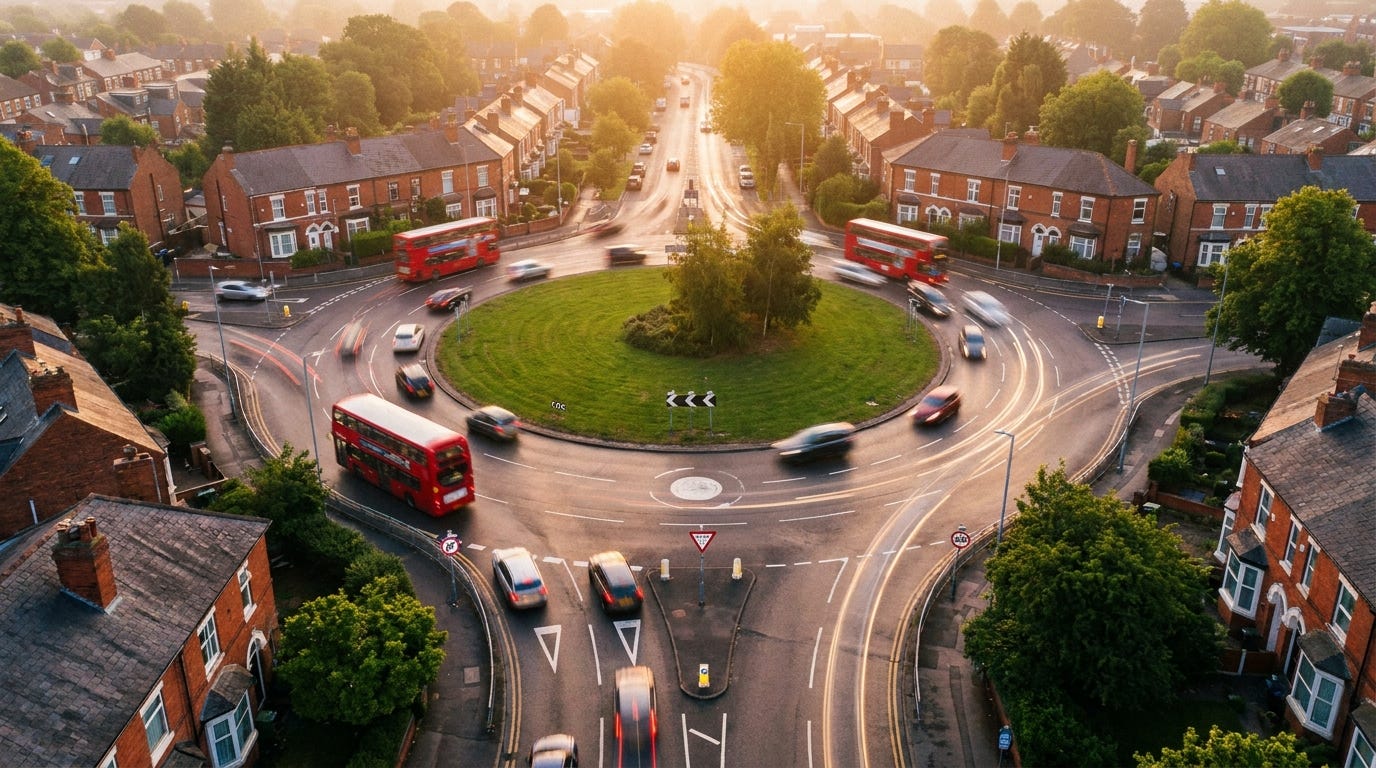
That experience crystallised something I’d been thinking about in the Christian faith. We talk a lot about the liberty we have in Christ, and rightly so. But liberty without boundaries isn’t freedom. It’s lawlessness. And lawlessness, while it looks like freedom, is actually fatal. It is true that we are not in the era of the law, but the opposite of that is not lawlessness, which is the lack of direction and boundaries.
Physically, you can see it on the road. No traffic rules means collisions, injuries, and death. Spiritually, the mechanics are the same. When you operate without guidance, doing whatever feels right in your own eyes or just doing what you know is wrong because no one’s stopping you, you’re driving blind. You don’t know when to stop. You have no leadership, no one asking you to pump the brakes. You’re working off your own devices, and that’s dangerous.
The Bible gives us King Saul as a case study. God gave him a clear instruction, and Saul failed to obey it. He did what made sense to him instead. That disobedience, that refusal to align himself with God’s direction, ended his reign and ultimately cost him his life. The prophet Samuel told him, “Obedience is better than sacrifice.” Saul thought he could improvise within the general idea of serving God, but the specific boundary mattered. When he ignored it, something in him died long before his body did.
So what are the boundaries? I wouldn’t say there are traffic-light rules in the mechanical sense (that is the era of the Law that was abolished in Christ). But within the Grace of God are definitely boundaries. The fruit of the Spirit, for one, is love, joy, meekness, long-suffering, and especially self-control. We have cravings. Our flesh wants things. Self-control means we don’t just follow every impulse. The Holy Spirit and the Word of God function as the clear pointer, the guidance system. Psalm 119 says,
“Your word have I hidden in my heart, that I might not sin against you.”
The Word becomes the compass. It’s the navigation that tells you what you can and can’t do.

Psalm 32:8 says,
“I will instruct you and teach you in the way you should go; I will counsel you with my eye upon you.”
The thread through all of it is God’s leadership, not self-leadership. The freedom we have as believers isn’t that we can do anything we want. But our safety lies in the fact that our liberty operates within the boundary of God’s will, God’s character, and God’s person. We’re free to move, but not free to contradict His Word and guidance by the Spirit.
That’s where the real freedom is, not in the absence of rules, but in the presence of a Guide who keeps us from crashing.
Till later,
AB
I love this as usual. Well written. I agree as a Good Father, God is not going to want lawless people in His dwelling. They not only go against His nature of order, they jeopardize the safety of those who are following His ways