There is no one who has been on a train or at least visited a train station in the United Kingdom who has not heard this mantra - “See it, Say it, Sorted”. It was a safety campaign urging people to report any anomalies to the British Transport Police.

Seriously, I have always had a thing for catchphrases. As a brand designer, I love the intelligence that creates something memorable, even ultimately timeless. However, this piece is not an appreciation of creativity and intelligence; it is rather an attempt to adapt the catchphrase and see what lessons we can glean from it.
I find the concept of Grace quite elusive - it has always been either under-appropriated or stretched to its hyper-state, and I have always appreciated people who are doing their due diligence to divide it rightly. This conversation has been ongoing in my church for some months now, and some of what I am writing here is inspired by it. My objective is to [re]introduce Grace using this popular catchphrase in the United Kingdom.
See It
Our lives have a lot to do with our sights, and Jesus established this when He says in Matthew 6:22-23 (NKJV) that
“The lamp of the body is the eye. If, therefore, your eye is good, your whole body will be full of light. But if your eye is bad, your whole body will be full of darkness. If, therefore, the light that is in you is darkness, how great is that darkness!”
This has both physical and spiritual implications.
The eyes, like some other parts of our body, are gates, and the state of the gates (open or closed) is very important. But equally important are the things that enter the gates. This is why Jesus says that a good eye is full of light, but the whole body is doomed if what enters as light is actually darkness.
Paul, when recounting his encounter with Jesus to King Agrippa, mentioned that he was commissioned
“...to open their eyes, in order to turn them from darkness to light, and from the power of Satan to God, that they may receive forgiveness of sins and an inheritance among those who are sanctified by faith in Me.” (Acts 26:18 NKJV).
While God has all the power to achieve this in us, the process requires our participation. This participation is based on conscious and subconscious awareness of what Jesus has done for us on the cross, what He has given us as an inheritance, and the kind of person He envisioned us to be.
If you are at the train station and cannot see, you have nothing to report to the British Transport Police. The entire process of getting the BTP involved starts with the ability to see it. Actually, it is not enough to ‘see’ it; you have to see it as something that must be reported. Jesus wants us to see what He has done, the value and the ultimate implications of it.
Say It
What’s next after seeing it? You SAY IT. My pastor, Pastor Dele Osunmakinde, said something very profound. He said, “Your confession of Spiritual realities is as potent as the realities themselves.” Your confession comes from deep conviction and belief. I mentioned that it is not enough to see, you have to see it for what it is. You have to have an unwavering belief that what you are seeing is abnormal before you can call the BTP, or else you will be wasting police resources and can even be charged for it.
“Your confession of Spiritual realities is as potent as the realities themselves.”
Pastor Dele Osunmankinde
Your belief is expressed in your confession. Paul established this relationship in Romans 10:10. “For with the heart one believes unto righteousness, and with the mouth confession is made unto salvation.” The cycle begins with seeing it for what it is (believing it), and progresses to saying it (confessing it). Our voice establishes and empowers our belief.
In the Greek Bible, the word “confess” has the same meaning as “acknowledge” (Homologeo). This means that the acknowledgement of our beliefs is revealed in our confession.
Saying it also speaks to our prayer engagement. Prayerlessness is simply a lack of faith, because why should you pray if you are not sure God can do it? Believing in the power of God makes you say it and say it until your joy is full. John 16:24
Sorted
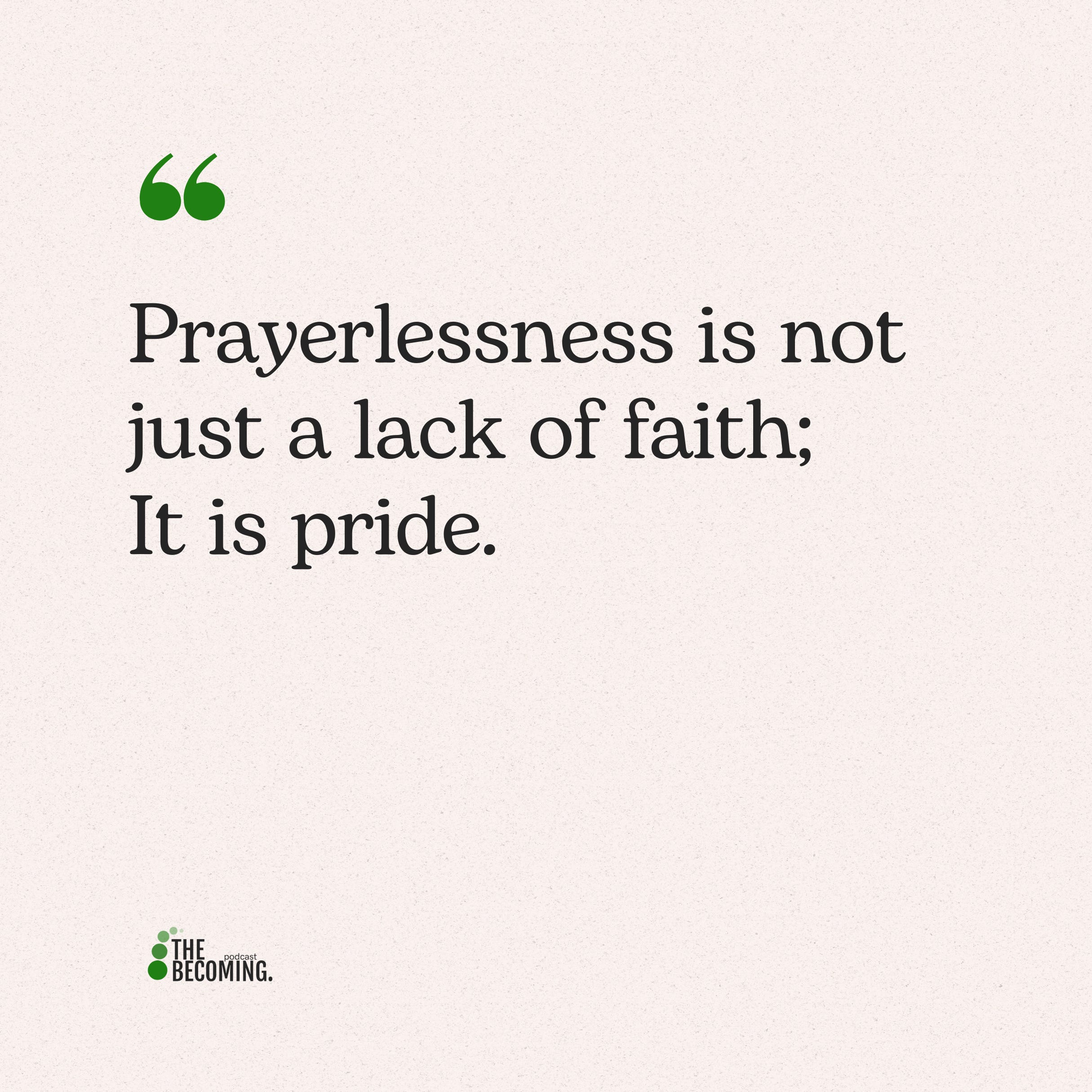
Do you realise that, in the progression of things, this bit does not actually lie in your responsibility? You only have to see it [right], and say it. The sorting actually belongs to someone in a better position to do it. If this is not true, you would have done it yourself rather than having to say it. This means that prayerlessness is not just a lack of faith; it is pride. It is a demonstration that you can get by without God.
In matters of salvation and Grace, we have to understand that we cannot save ourselves. There is nothing we could have done, or could ever do, that would save us. God has already assumed that role, and this is why it will not (or cannot) be of works. Ephesians 2:9.
Funnily, I used to think what is being said here is “Sort It”, after the pattern of the previous ones, until I saw it written. And this has implications: you want to communicate confidence to the people you are asking to see it and say it, hence the choice of tense for the BTP role.
Consider it sorted. Actually, God wants us to know that everything is sorted, because it actually is. Jesus said It is finished (John 19:30). It cannot be any more perfect than that.
All the tenses related to salvation and the walk of Grace are past or perfect tense. God is not just figuring it out now, nor is He waiting for us to do something. Actually, in the Spirit, seeing it and saying it comes as a response to having it sorted. God has sorted it, and He wants us to see it and say it to partake of it.
I want to take the liberty to rearrange the catchphrase. Sorted, See It, Say It.
Love and Light.
Abayomi Adeoye
Comments
BE THE FIRST TO COMMENT ON SUBSTACK ↗No comments yet — head over to Substack to start the conversation.
Comments live on Substack. Add yours there and it appears here on the next refresh.